Featured
Hiển thị các bài đăng có nhãn animal. Hiển thị tất cả bài đăng

Chủ Nhật, 13 tháng 11, 2016

An interesting world of Gibbon facts and infor

An interesting world of Gibbon interesting facts and infor:

  1. Gibbons spend almost all of their time in the treetops of the rainforest. They even sleep there, resting in the forks of branches.
  2. Their dramatic form of locomotion, called brachiating, can move gibbons through the jungle at up to 35 miles (56 kilometers) an hour, bridging gaps as wide as 50 feet (15 metres) with a single swinging leap.
  3. Because they are not able to swim, different types of gibbons are isolated in different areas by large rivers.
  4. When gibbons walk, whether along branches or in the rare instances when they descend to the ground, they often do so on two feet, throwing their arms above their head for balance.
  5. They are the most bipedal of all non-human primates and are often studied for clues to what evolutionary pressures may have led to human walking.
  6. There are 15 recognized species of gibbons ranging from northeastern India to southern China to Borneo. Let’s discover some interesting science facts that will amaze you.
  7. Gibbons are omnivores (they eat both plants and animals). Their diet consists mainly of fruit, but they also eat different types of seed, shoots, flowers and insects.
  8. Gibbons live in family groups composed of breeding couple and their offspring. Gibbons are monogamous (one couple mate for life) and they form very strong bonds with family members. Grooming plays important role in their social life.
  9. Gibbons are territorial animals that usually live on a territory of 25 to 40 hectares. They fiercely defend their home.
  10. Gibbons are highly intelligent animals. They can recognize themselves in the mirror. Also, they are able to communicate via various songs. Songs usually last 10 to 30 minutes and both males and females perform them. Main purpose of the song is to announce presence of the group on a certain territory.
Are you bored? Let’s have a quick look at our funny images that are bound to bring smile on your face.

Thứ Năm, 10 tháng 11, 2016

What should you do when being bitten by cats?

Here are some ways to react to cats bite and scratche and other random facts about cats right here

1
React calmly. Never hit, shout, chase, or lose your temper with a cat. You will simply terrify the cat and cause it to become nervous and confused.
Never call a cat to you and then punish it. The cat hasn't got a clue why you're responding negatively to him. In fact, the cat probably expects a pleasant response if you call it.


2
Remove yourself from the situation. The first thing to do is stop touching the cat and then hold your hands well out of striking range. If he doesn't calm down within a few seconds, stand up slowly so you can remove him from your lap. Walk away and do not return until he has calmed down.
Avoid soothing your cat after biting or scratching. Instead, signal your displeasure to the cat. After you've disciplined it, do not begin cuddling and petting him. This will confuse your cat and give him mixed signals. It may even begin biting you in order to get a cuddle.

3
Give the cat a way out. If you are trying to get from one room to another and a hissing, snarling cat blocks the way, look at the situation from his viewpoint. The cat believes he is trapped and you are walking towards him, which he perceives as a threat. He wants to run but there is no escape route so he must defend himself by attacking. The simple solution is to step aside, let the cat pass (which he will do at speed) and then go about your way.
Don't feed your cat for 20 minutes following a biting or scratching incident, as this might be wrongly taken as a reward.
Wanna check some of the most funny pictures with captions right now?

4
Understand what encourages a cat to change its behavior. Cats respond best to positive reinforcement, namely praising and rewarding appropriate behavior, while ignoring and withdrawing from inappropriate behavior.
Hand the cat a catnip mouse to bite instead of you. Then, praise the cat for biting the toy.

5
Try the voice and body method. As soon as the cat bites or scratches, say "NO!" in an authoritative tone. At the same time, point your finger at the cat. Stare at the cat directly with an unimpressed or fierce look. Stares are regarded in the cat world as a threat of dominance.
It also helps to remove yourself from the cat's vicinity after doing this, or to ignore him for about 10 minutes.

6
Try the hand clapping method. When your cat bites or scratches, clap your hands and say "NO!" firmly. Remember, don't shout at your cat or clap directly in your cat's face. It can scare him and leave him nervous. Repeat this whenever biting or scratching occurs. Your cat should learn to stop.
This method works with a dominant, aggressive or cheeky cat. It's not recommended for use with a timid or nervous cat, since it can reinforce these traits.

7
Try to ignore the cat. The moment your cat stops biting or scratching you, stand up and walk away in a dismissive fashion without any further interaction. Make sure that the cat is all alone in the room with no human interaction for 5 to 10 minutes. Repeat this each time he tries to bite or scratch you. He will quickly associate the bad behavior with being ignored.
This method won't work with all cats, but works well with very affectionate cats, since they'll miss the attention, and with kittens, since they're still learning manners.

Right here in our site, you can also learn all information as you want as amazing science facts and much more.

Thứ Hai, 7 tháng 11, 2016

Reptile facts that will blow your mind

Below are some amazing news and facts about animal facts and it's the time for reptile facts for your checking out. Let's enjoy!

1. There are more than 8,000 species of reptiles on the planet, and the live on every continent except Antarctica (where it is too cold).

2. "Cold-blooded" is not the best way to describe reptiles. Their blood is not necessarily cold by itself. But they are ectothermic, which means they get their body heat from external sources. Reptiles cannot regulate their body temperature internally as humans do.

3. Reptiles are among the longest-lived species on the planet. For example, large tortoises such as the Aldabra tortoise can live for more than 150 years. Alligators can live nearly 70 years. Ball pythons, a popular type of pet snake, can live up to 40 years (consider that before getting one as a pet).

4. Most of the world's snakes (nearly two-thirds) are non-venomous. Only about 500 snake species are venomous, and of those only 30 - 40 are considered harmful to humans. In other words, less than 2 percent of all snakes are considered harmful to humans.

5. With regard to reptile fact #4 above, the opposite is true in Australia. There are actually more venomous snakes in Australia than non-venomous snakes. The inland taipan is one of the most popular of these venomous Australian snakes. Australia is the only continent where venomous snakes outnumber non-venomous snakes.

6. It is a fact that more Americans die each year from bee stings than from snake bites.

7. Certain types of snakes can go months without eating. This is especially true of the big constrictors, such as the Anaconda and the reticulated python. Snakes eat large meals (relative to their body size), and they have much slower metabolisms than we humans have. This partly explains how they can go so long between meals.

8. Most kinds of reptiles do not tolerate the cold very well. But the Blanding's turtle (Emydoidea blandingii) is sometimes found swimming under the ice in the Great Lakes region of the United States. 

There exists a lot of amazing creatures in our world that are bound to make you surprise. Do you want to check out our long and rich source of tigers facts in your spare time?

Image result for reptile facts

9. Snakes and lizards flick their tongues in the air to capture scent particles. They don't smell through their noses like you and I. Instead, the use their tongues to collect scent particles and then pass the particles over something called a Jacobson's organ to decipher the air around them. This is partly how reptiles hunt for food.

10. True to its name, the African egg-eating snake (of the genus Dasypeltis) prefers to dine on the eggs of other animals. It will swallow the egg whole, and then use tiny "spikes" extending internally from its spine to crack the egg open and swallow the nutritious contents. Lastly, it will regurgitate the unneeded egg shell in a neatly folded piece.

11. Contrary to popular belief, chameleons do not change their color to blend in with different backgrounds. Chameleons are naturally camouflaged with their surroundings (most are predominantly green to match their treetop environment). The fact is that chameleons change their color in limited ways, usually by brightening or darkening their skin. But these color changes are related to temperature regulation and emotional changes. A frightened or angry chameleon, for example, will become extremely bright in color.

12. The skulls of snakes are made up of many small bones that are interconnected in a flexible fashion. This is entirely different from a human skull, which is one solid piece. This allows snakes to expand their jaws and heads in order to eat prey items larger than their heads. A common garter snake, for example, could swallow a frog more than twice the size of its head. Large constrictors such as the anaconda can expand their jaws to an almost alarming degree!

13. Many people think that reptiles are slimy. But the fact is that reptiles do not have sweat glands like you and I have, so their skin is usually cool and dry. I have several pet snakes for example, and people who touch them for the first time always say the same thing: "Oh wow, they're not slimy at all."

14. The scales of all snakes (and many lizard species) are made of keratin, which is the same substance that makes up the hair and fingernails of humans.

15. Snakes shed their skin in relation to their growth rate. A young snake will shed more often because they typically grow fastest during the first two years of their lives. An older snake will shed less often as its rate of growth slows down

Just keep checking out our site everyday to get more updated news and information about everylife aspects as animal, plant or science facts and so on.

Reptile facts that will blow your mind

Below are some amazing news and facts about animal facts and it's the time for reptile facts for your checking out. Let's enjoy!

1. There are more than 8,000 species of reptiles on the planet, and the live on every continent except Antarctica (where it is too cold).

2. "Cold-blooded" is not the best way to describe reptiles. Their blood is not necessarily cold by itself. But they are ectothermic, which means they get their body heat from external sources. Reptiles cannot regulate their body temperature internally as humans do.

3. Reptiles are among the longest-lived species on the planet. For example, large tortoises such as the Aldabra tortoise can live for more than 150 years. Alligators can live nearly 70 years. Ball pythons, a popular type of pet snake, can live up to 40 years (consider that before getting one as a pet).

4. Most of the world's snakes (nearly two-thirds) are non-venomous. Only about 500 snake species are venomous, and of those only 30 - 40 are considered harmful to humans. In other words, less than 2 percent of all snakes are considered harmful to humans.

5. With regard to reptile fact #4 above, the opposite is true in Australia. There are actually more venomous snakes in Australia than non-venomous snakes. The inland taipan is one of the most popular of these venomous Australian snakes. Australia is the only continent where venomous snakes outnumber non-venomous snakes.

6. It is a fact that more Americans die each year from bee stings than from snake bites.

7. Certain types of snakes can go months without eating. This is especially true of the big constrictors, such as the Anaconda and the reticulated python. Snakes eat large meals (relative to their body size), and they have much slower metabolisms than we humans have. This partly explains how they can go so long between meals.

8. Most kinds of reptiles do not tolerate the cold very well. But the Blanding's turtle (Emydoidea blandingii) is sometimes found swimming under the ice in the Great Lakes region of the United States. 

There exists a lot of amazing creatures in our world that are bound to make you surprise. Do you want to check out our long and rich source of tigers facts in your spare time?

Image result for reptile facts

9. Snakes and lizards flick their tongues in the air to capture scent particles. They don't smell through their noses like you and I. Instead, the use their tongues to collect scent particles and then pass the particles over something called a Jacobson's organ to decipher the air around them. This is partly how reptiles hunt for food.

10. True to its name, the African egg-eating snake (of the genus Dasypeltis) prefers to dine on the eggs of other animals. It will swallow the egg whole, and then use tiny "spikes" extending internally from its spine to crack the egg open and swallow the nutritious contents. Lastly, it will regurgitate the unneeded egg shell in a neatly folded piece.

11. Contrary to popular belief, chameleons do not change their color to blend in with different backgrounds. Chameleons are naturally camouflaged with their surroundings (most are predominantly green to match their treetop environment). The fact is that chameleons change their color in limited ways, usually by brightening or darkening their skin. But these color changes are related to temperature regulation and emotional changes. A frightened or angry chameleon, for example, will become extremely bright in color.

12. The skulls of snakes are made up of many small bones that are interconnected in a flexible fashion. This is entirely different from a human skull, which is one solid piece. This allows snakes to expand their jaws and heads in order to eat prey items larger than their heads. A common garter snake, for example, could swallow a frog more than twice the size of its head. Large constrictors such as the anaconda can expand their jaws to an almost alarming degree!

13. Many people think that reptiles are slimy. But the fact is that reptiles do not have sweat glands like you and I have, so their skin is usually cool and dry. I have several pet snakes for example, and people who touch them for the first time always say the same thing: "Oh wow, they're not slimy at all."

14. The scales of all snakes (and many lizard species) are made of keratin, which is the same substance that makes up the hair and fingernails of humans.

15. Snakes shed their skin in relation to their growth rate. A young snake will shed more often because they typically grow fastest during the first two years of their lives. An older snake will shed less often as its rate of growth slows down

Just keep checking out our site everyday to get more updated news and information about everylife aspects as animal, plant or science facts and so on.

Thứ Ba, 13 tháng 9, 2016

Don't Tigers Kill Their Babies?

There are some information that tigers sometimes eat their babies. Is it true? Keep reading to find out the answer:

Image result for do tigers eat their cubs

No, they don't. In contrast, tigers are extremely protective of their young and do whatever in their power to shelter them from the dangerous conditions of the Asian jungles. 


For more facts: tiger facts for kids
It would be valid to mention, however, that some males may accidentally kill their young, thinking that the cubs weren't theirs. This is done for the sole reason of bringing the tigress into heat. If she was to raise her cubs, it would take her circa two years to train and teach them how to survive in their own, but the male cannot afford that much time, so without the knowledge that he is killing his own offspring, he gets rid of them. 

In other rare cases, when the mother sees that her cub is sick or injured, or anyhow abnormal, and the chances of that cub making it into adulthood are slim, she will intentionally kill it. This happens because she doesn't want to spend precious energy on a cub who won't survive in the wild by itself and is unlikely to pass his/her genes to the next generation. This phenomenon is quite rare though.

Thứ Tư, 31 tháng 8, 2016

What do giraffes look like?

Have you ever wondered an interesting question: What does a giraffe baby look like? Because we have little chance to see it, this writing will help you imagine their appearance

The giraffe is a tall mammal with long legs, a spotted coat and an elongated neck. This mammal is the tallest in the world, with male giraffes growing as tall as 18 feet.

Image result for What do giraffes look like?

Different subspecies of giraffes have different types of spots. The spots of the Masai giraffe look similar to oak leaves. Some giraffes have square spots, making them look like they are wearing nets. These spots may act as camouflage for wild giraffes.
Learn more: tiger facts                     

Image result for What do giraffes look like?

Males and females have two ossicones, or hair-covered horns, on their heads. Male giraffes butt these horns together during play. A giraffe's neck is approximately 6 feet long and weighs as much as 600 pounds. Each of a giraffe's legs is also 6 feet long. The long legs and neck make it easier for giraffes to reach the leaves on tall trees.

Read more animal fun facts

Thứ Hai, 29 tháng 8, 2016

Basic information about tigers

Here is overview basic information about the largest wild cat in the world: Tigers - amazing animal facts


Kết quả hình ảnh cho tiger facts

Type: Mammal
Diet: Carnivore
Life span: 10-15 years
Size: Head and body, 1.5 to 1.8 m; tail, 0.6 to 0.9 m
Weight: 109 to 227 kg
Habitat: from the Siberian taiga to open grasslands and tropical mangrove swamps.
Range: Bengal Tiger is most numerous in the Sundarbans region of India and Bangladesh. It is also found in northern and central India and in Myanmar (formerly Burma) and Nepal.
Scientific name: Panthera tigris
Also see elephant facts


1) Tigers are the largest wild cats in the world. Adults can weigh up to 363kg - that's about the same as ten ten year olds! - and measure up to 3.3m!

2) Tigers are carnivores, eating only meat. They mainly feed on large mammals such as deer, wild pigs, antelope and buffalo. 

3) Tigers are solitary hunters, and generally search for food alone at night. They quietly stalk their prey until they are close enough to pounce - then they kill their victim with a bite to the neck or back of the head. Ouch!

4) Unlike most members of the cat family, tigers like water. They are good swimmers and often cool off in pools or streams. 

5) When a tiger wants to be heard, you'll know about it, gang - because their roar can be heard as far as three kilometres away.

6) They may be big and heavy, but tigers are by no means slow movers. In fact, at full speed they can reach up to 65km/h!

7) These fierce felines have walked the earth for a long time. Fossil remains of tigers found in parts of China are believed to be 2 million years old. Yikes!

8) Every tiger in the world is unique - no two tigers have the same pattern of stripes.

9) Today, there are five subspecies of tiger: Bengal, South China, Indochinese, Sumatran and Siberian. Sadly, three subspecies of tiger have become extinct - Caspian, Bali and Javan.

10) Less than 100 years ago, tigers could be found throughout Asia. Sadly, hunting and habitat loss have put populations at risk, and today their range has been reduced to around 7% of its former size.


Thứ Năm, 18 tháng 8, 2016

Don't cockroaches have ability of flight?

Don't cockroaches have ability of flight? Can you answer this amazing animal facts quesrion? Keep reading for answering


Many of the more than 3,500 cockroach species in the world can fly. The flying capabilities of cockroaches vary according to the particular species, and sometimes sexual category, to which they belong. In Canada, the German cockroach is the most important and prevalent cockroach species in the country. Depending on the region, other significant pest species present are the American, brown-banded, oriental, smoky-brown, and wood varieties of cockroach. Though both males and females of the German cockroach have wings, they do not fly except for short downward gliding. Meanwhile, both sexes of the smoky-brown species of cockroach are strong fliers. Amongst the brown-banded and wood cockroaches, only the males enjoy flying capabilities. Though not regarded as true flyers, both male and female American cockroaches maintain the ability to glide through the air. Both genders of the oriental cockroach lack the capacity to fly. The Canadian cockroach species capable of flying are generally only able to remain in the air for short amounts of time.


Despite possessing four wings, each flying cockroach uses just a single pair for air travel. Thick and protective, the front pair of wings displays the same coloration as the body of the cockroach and rests against the back of the insect when not in use. The back pair of wings remains hidden and protected beneath the front pair until the cockroach takes flight. When preparing to fly, cockroaches lift the front wings to expose the back wings. The insects keep the front wings lifted while flying and move through the air by using the back pair. In contrast to the front pair, the back wings of cockroaches that fly are membranous, thin and clear.

Even though many cockroaches can fly, the insects boast highly effective legs and prove more adept at running than flying. The body of a cockroach features three legs extending from each side of the thorax. Covered with setae and pointy spines, each leg varies in length and fulfills different yet interrelated functions that enable the physical act of running. With a total of six legs working together to propel the insects forward, cockroaches can cover a distance equal to roughly 50 body lengths in a single second. For a human to run the same distance as 50 of his or her own body lengths in one second, he or she would have to reach a speed of about 200 miles per hour.

For more facts of life

What do penguins look like?

That is really amazing! Let’s discover awesome penguin facts by this article:

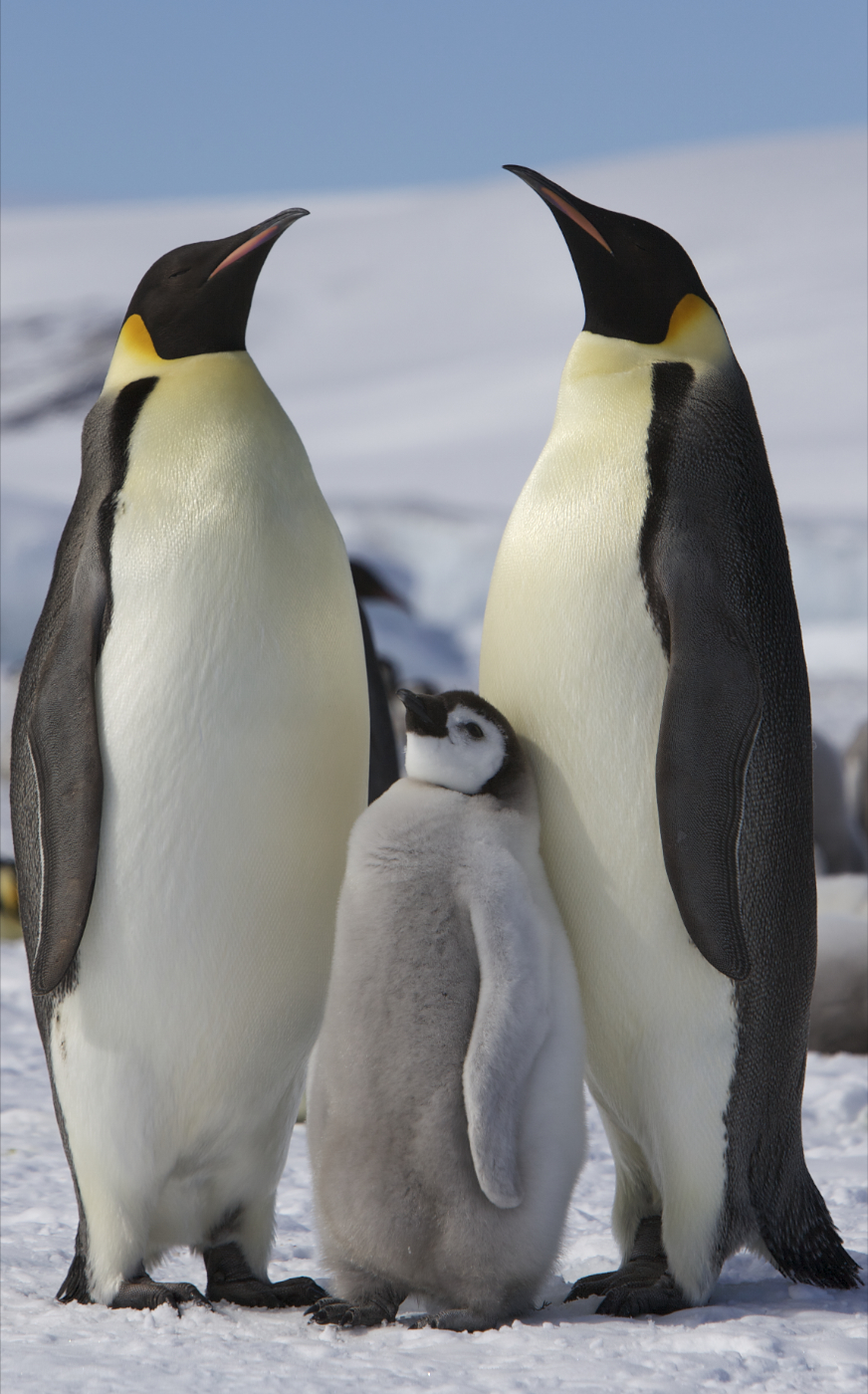
All penguins are black with white undersides, and are commonly described as wearing tuxedos. This color pattern acts as camouflage when the penguin is swimming, protecting it from predators. From underneath, the white belly blends with the bright water surface, and fromabove, the black back is indistinguishable from the dark water. 
Penguin species can be grouped according to common characteristics. Banded penguins have black and white stripe patterns on their chests and heads. The crested penguins all have bright yellow or orange plumes on their heads. Brushtail penguins have long stiff tail feathers. The king and emperor penguins have bright yellow and orange chest and head patches, and the yellow-eyed penguin has a yellow crown. The fairy penguin's feathers are bluish. The emperor penguin is the largest, at nearly four feet tall and seventy-five pounds. 


The small fairy penguin is sixteen inches tall and about three pounds. All have solid, heavy bones that help them dive deeply into the water. They have streamlined bodies that move smoothly through the water as they pump their strong, flipperlike wings and steer using their webbed feet and tails as rudders. Penguins can hold their breath for many minutes at a time, and they frequently leap out of the water, porpoiselike, to take inmore air. On land, penguins walk with an awkward sideways waddle. Because their short legs are set back on their bodies, they stand erect and must hold out their flippers for balance. Penguins often toboggan themselves by flopping on their bellies and pushing with their flippers and feet. Penguin feathers are tiny and stiff, overlapping to form a waterproof coat. 
An underneath layer of down helps to trap warm air and protect the penguin from the cold water and wind. Penguins of the Antarctic region have an insulating layer of blubber. Those in temperate climates often have to cool themselves down by ruffling their feathers and holding out their flippers. They can control the flow of blood to their unfeathered areas, such as the feet and under their flippers, which helps regulate their body temperature. Penguins preen their feathers regularly, to spread waterproofing oil from a gland near the tail.

Penguins have very short legs, which are used under water for steering. On land it's not easy for a penguin to walk. Waddling seems to be the easiest way to walk with short legs (in fact this has been researched by scientists). In addition, some species displace themselves by hopping over the ground.
Although you don't see them, penguins do have knees and upper legs. They are completely enclosed within the penguin body. The upper leg is oriented horizontally. In contrast to other birds (whose feet are placed in the middle of their body) penguin feet are set all the way back, causing an upright stand.

Read more: animal fun facts

Thứ Ba, 16 tháng 8, 2016

Where do tigers live?

If you have ever caught yourself pondering what do Tigers live? You can’t say that you haven’t because that means that you wouldn’t have ended up here! Let us teach you all about habitats of one of the most amazing big cats in the world.

The tiger is native to Asia from the Caucasus and the Caspian Sea to Siberia in the north and Indonesia and even in Borneo and the Philippines in the south. Tigers use to had a huge habitat because they are able to adapt to different types of environments which range from the Siberian taiga to open grasslands and tropical mangrove swamps. However as it can be seen on the map, their habitat has been reduced dramatically.

Kết quả hình ảnh cho tigers

Tigers are extremely territorial though so they will fight other animals and other tigers that invade their space. This problem has become more of an issue due to the natural environment for tigers being destroyed at an alarming rate, as a male tiger may have a territory of up to 60 to 100 square kilometers, while females up to 20 square kilometers, as this numbers change according with the habitat and subspecies. As a result they have to venture into new territories to be able to find adequate amounts of food.


Tigers tend to live on their own, depending on themselves for survival. They will only be seen with other tigers when they are looking for a mate or in the case of females when they are taking care of their offspring. The males have more personal territory than females when it comes to their natural habitat. It is natural for the females to have territories that overlap that of males. This is more acceptable than if another male tries to invade that same type of space.

Thứ Sáu, 12 tháng 8, 2016

You might be surprised with the owl facts

Here are some amazing facts about owl for those who love to know more about animal facts:


  • Many owl species have asymmetrical ears that are different sizes and different heights on their heads. This gives the birds superior hearing and the ability to pinpoint where prey is located, even if they can't see it.
  • Several owls species have ear tufts on their heads but they aren't ears at all. These tufts of feathers may indicate the bird's mood, help keep it camouflagedby mimicking branches or leaves or be used to show aggression.
  • The flattened facial disk of an owl funnels sound to the bird's ears and magnifies it as much as ten times to help the owl hear noises humans can't detect.
  • Feather coloration is species specific. It can be brown, rust, gray, white and black. Mix of the colors provides nice camouflage for both predators and prey.
  • Some species of owls have ear-like structures on their head. They cannot detect sound, but serve as structures which provide camouflage. They can be also used to show aggression.
  • Owls have excellent sense of hearing. Ears are located on the both sides of the head, behind the eyes. They are often located on different heights, providing better reception of the sound, which is important for detection of the prey.
  • Although it looks like the owl can turn its head completely (360 degrees), it can move it only to a certain extent (just 270 degrees). Owl can look across its shoulder, but it cannot rotate the head a full circle.
  • Owls are farsighted, which means that they cannot clearly see the objects which are in front of their eyes.
  • An owl's eyes are supported by bony eye sockets and they cannot turn their eyes. Instead, owls rotate their heads up to 270 degrees (135 degrees to either side), but they cannot turn their heads all the way around.
  • An owl has three eyelids: one for blinking, one for sleeping and one for keeping the eye clean and healthy. The third eyelid is also called the nictitating membrane, and many other birds also have it.
  • A barn owl can eat up to 1,000 mice each year, usually swallowing them whole. Many farmers try to attract barn owls to help control rodent populations in agricultural fields.
  • Owls are carnivorous and will eat rodents, small or medium sized mammals, nocturnal insects, fish and other birds, including smaller owls. After digestingtheir food, owls regurgitate hard pellets of compressed bones, fur, teeth, feathers and other materials they couldn't digest. Ornithologists study those pellets to learn more about an owl's diet.
  • Owls have zygodactyl feet with two toes pointing forward and two toes pointing backward, and all their toes have sharp talons. This gives the birds a stronger, more powerful grip so they can be more effective predators.

Thứ Năm, 11 tháng 8, 2016

Facts you didn't know about pigs before

Keep reading for more interesting information about animal facts. this is pig facts:
  • Humans farm pigs for meat such as pork, bacon and ham.
  • Some people like to keep pigs as pets.
  • Wild pigs (boar) are often hunted in the wild.
  • In some areas of the world, wild boars are the main source of food for tigers.
  • Feral pigs that have been introduced into new areas can be a threat to the local ecosystem.
  • Pigs can pass on a variety of diseases to humans.
  • If you’ve ever suggested that someone was ‘sweating like a pig’, then you’d be wrong. Pigs have hardly any sweat glands, and one of the best ways for them to cool down is to wallow in all of that glorious mud.


  • Pigs do not “eat like pigs” or “pig out.” They prefer to eat slowly and savor their food.
  • Suzanne Held, who studies the cognitive abilities of farmed animals at the University of Bristol’s Centre of Behavioural Biology, says that pigs are “really good at remembering where food is located, because in their natural environment food is patchily distributed and it pays to revisit profitable food patches.”
  • Pigs are clean animals. If given sufficient space, they will be careful not to soil the area where they sleep or eat. Pigs don’t “sweat like pigs”; they are actually unable to sweat. They like to bathe in water or mud to keep cool, and they actually prefer water to mud. One woman developed a shower for her pigs, and they learned to turn it on and off by themselves.
  • In his book The Whole Hog, biologist and Johannesburg Zoo director Lyall Watson writes, “I know of no other animals [who] are more consistently curious, more willing to explore new experiences, more ready to meet the world with open mouthed enthusiasm. Pigs, I have discovered, are incurable optimists and get a big kick out of just being.”

Thứ Tư, 10 tháng 8, 2016

Tigers - Awesome Facts and Photos

Learn tiger facts for kids about the size, diet, population, range, behavior and other fascinating facts about tigers and some other animal facts:

Tiger's

  • A tiger can eat up 60 pounds of meat but usually they eat less.
  • It can take a couple of days for the tiger to eat their entire prey.  They will eat until they are full then cover the animal with leaves and dirt to hide it.  When they are hungry again they will go back to finish eating.
  • Unlike other cats tiger like the water.  They like to live by water.  Tigers can swim up to 4 miles.
  • Like our fingerprints no two tigers have the same stripe pattern.
  • Tigers are in the cat family and is the largest cat in the world.
  • A male tiger is called a Tiger.
  • A female tiger is called a tigress.
  • A baby is called a cub.
  • They can weight between 250-700 pounds.
  • They can be 6 feet – 11 feet long with a 3 foot long tail.
  • Tigers can run up to 40 miles per hour and jump 16 feet high.
  • A tigers roar can be heard over 2 miles away.
  • They are the 3rd largest land carnivore (meat eating) in the world. Polar Bears are first and Brown Bears are second.


  • Tigers like to hunt at night.  They have excellent eyesight for catching prey.
  • Tigers hunt different types of deer, buffalo, antelopes, wild boars, baby elephant and rhinos and most other animals they can catch.
  • Tigers like to sneak up on their prey, they watch it then sprint to catch it.  They bite their prey throat or back of the neck to kill it.
  • Not only are tigers fur stripped but their skin is stripped too!
  • A tiger retracts their claws when walking.  They do not leave claw prints in their footprints.
  • Tigers like to be alone except during mating.
  • Although tigers are powerful and fast over short distances, the Bengal tiger cannot outrun fleet footed prey such as deer. Instead it uses stealth to catch its victims; attacking from the side or the rear.
  • Tigers use their distinctive coats as camouflage (no two have exactly the same stripes).
     Also see: penguins facts for kids

Được tạo bởi Blogger.
Copyright © 2015 All amazing and interesting facts
| Distributed By Gooyaabi Templates