Featured
Hiển thị các bài đăng có nhãn facts. Hiển thị tất cả bài đăng

Thứ Hai, 24 tháng 10, 2016

10 surprising junk foods facts

Let’s jump right in our 10 surprising junk foods facts:

funny images on junk foods

1. Remember that don’t let the salad in a doner kebab fool you. By eating just one doner kebab, you are consuming almost double a woman’s recommended daily fat intake in one go and slightly more than a man’s recommended daily fat intake.

2. Strawberry Milkshake from a fast food chain contains more than 50 different chemicals. So instead, just make one for yourself at home, with only 2 ingredients…. strawberries and milk.

3. A single donut will meet your maximum allowance for trans fats for the whole day. But thefact is, no one eats just one donut.

4. Before deciding to go McDonalds or other similars, remember that TBHQ (E319) is a petroleum-based ingredient, similar to lighter fluid, used as a preservative in McDonalds French fries. It has been linked to asthma; skin conditions and studies have also shown also cancer.

5. You know, a single can of Coca Cola has 10 teaspoons of sugar in it. If you drink a can of Coca Cola every day for a month, this is equal to almost a whole bag of sugar. This sugar is not only bad for your teeth but your body turns it into fat shortly after you’ve consumed it.

6. Coca Cola can be used as an all-purpose cleaner because as well as the above, it has a high amount of citric acid in it. Let’s imagine and face what this can do to your insides

7. Not many of us aware of the truth that the increase of junk food is directly related to the increase in obesity, heart disease, high blood pressure, certain cancers, tooth decay, andother diseases.

8. If you’re looking for someone or something to blame for the junk food culture that exists today then blame your television. It’s a proven fact that nearly 80 percent of all food commercials that air on Saturday morning children shows are for junk food.

9. Raking in $23 billion annually, the United States’ candy market is the global leader in junkfood sales. Surprisingly, candy sales have continued to increase despite concerns over junk food and obesity.

10. More than $2 billion in candy is sold for Halloween, more than any other holiday in America. It makes Halloween become the unhealthiest and “fattest” holiday. 

Keep following factoflife to get more news, facts, joke of the day and much more

Thứ Sáu, 21 tháng 10, 2016

Whether or not have the existence of afterlife

Whether or not have the existence of afterlife? This interesting science facts will be answered via this amazing article. Let's dive in!

The existence of life after death is a universal question. Job speaks for all of us by stating, “Man born of woman is of few days and full of trouble. He springs up like a flower and withers away; like a fleeting shadow, he does not endure....If a man dies, will he live again?” (Job 14:1-2, 14). Like Job, all of us have been challenged by this question. Exactly what happens to us after we die? Do we simply cease to exist? Is life a revolving door of departing and returning to earth in order to eventually achieve personal greatness? Does everyone go to the same place, or do we go to different places? Is there really a heaven and hell?


The Bible tells us that there is not only life after death, but eternal life so glorious that “no eye has seen, no ear has heard, and no mind has imagined what God has prepared for those who love him” (1 Corinthians 2:9). Jesus Christ, God in the flesh, came to the earth to give us this gift of eternal life. “But he was pierced for our transgressions, he was crushed for our iniquities; the punishment that brought us peace was upon him, and by his wounds we are healed” (Isaiah 53:5). Jesus took on the punishment that all of us deserve and sacrificed His life to pay the penalty for our sin. Three days later, He proved Himself victorious over death by rising from the grave. He remained on the earth for forty days and was witnessed by hundreds before ascending to heaven. Romans 4:25says, “He was delivered over to death for our sins and was raised to life for our justification.”

The resurrection of the Christ is a well-documented event. The apostle Paul challenged people to question eyewitnesses for its validity, and no one was able to contest its truth. The resurrection is the cornerstone of the Christian faith. Because Christ was raised from the dead, we can have faith that we, too, will be resurrected. The resurrection of Jesus Christ is the ultimate proof of life after death. Christ was only the first of a great harvest of those who will be raised to life again. Physical death came through one man, Adam, to whom we are all related. But all who have been adopted into God's family through faith in Jesus Christ will be given new life (1 Corinthians 15:20-22). Just as God raised up Jesus' body, so will our bodies be resurrected upon Jesus' return (1 Corinthians 6:14).

Image result for life after death
funny pics for afterlife

Although we will all be eventually resurrected, not everyone will go to heaven. A choice must be made by each person in this life, and this choice will determine one’s eternal destination. The Bible says that it is appointed for us to die only once, and after that will come judgment (Hebrews 9:27). Those who have been made righteous by faith in Christ will go into eternal life in heaven, but those who reject Christ as Savior will be sent to eternal punishment in hell (Matthew 25:46). Hell, like heaven, is not simply a state of existence, but a literal place. It is a place where the unrighteous will experience never-ending, eternal wrath from God. Hell is described as a bottomless pit (Luke 8:31; Revelation 9:1) and a lake of fire, burning with sulfur, where the inhabitants will be tormented day and night forever and ever (Revelation 20:10). In hell, there will be weeping and gnashing of teeth, indicating intense grief and anger (Matthew 13:42).

There are weird facts that God takes no pleasure in the death of the wicked, but desires them to turn from their wicked ways so that they can live (Ezekiel 33:11). But He will not force us into submission; if we choose to reject Him, He accepts our decision to live eternally apart from Him. Life on earth is a test, a preparation for what is to come. For believers, life after death is eternal life in heaven with God. For unbelievers, life after death is eternity in the lake of fire. How can we receive eternal life after death and avoid an eternity in the lake of fire? There is only one way—through faith and trust in Jesus Christ. Jesus said, “I am the resurrection and the life. He who believes in me will live, even though he dies; and whoever lives and believes in me will never die...” (John 11:25-26).


The free gift of eternal life is available to all. “Whoever believes in the Son has eternal life, but whoever rejects the Son will not see life, for God’s wrath remains on him” (John 3:36). We will not be given the opportunity to accept God’s gift of salvation after death. Our eternal destination is determined in our earthly lifetimes by our reception or rejection of Jesus Christ. “I tell you, now is the time of God's favor, now is the day of salvation” (2 Corinthians 6:2). If we trust the death of Jesus Christ as the full payment for our sin against God, we are guaranteed not only a meaningful life on earth, but also eternal life after death, in the glorious presence of Christ.

Thứ Hai, 29 tháng 8, 2016

Basic information about tigers

Here is overview basic information about the largest wild cat in the world: Tigers - amazing animal facts


Kết quả hình ảnh cho tiger facts

Type: Mammal
Diet: Carnivore
Life span: 10-15 years
Size: Head and body, 1.5 to 1.8 m; tail, 0.6 to 0.9 m
Weight: 109 to 227 kg
Habitat: from the Siberian taiga to open grasslands and tropical mangrove swamps.
Range: Bengal Tiger is most numerous in the Sundarbans region of India and Bangladesh. It is also found in northern and central India and in Myanmar (formerly Burma) and Nepal.
Scientific name: Panthera tigris
Also see elephant facts


1) Tigers are the largest wild cats in the world. Adults can weigh up to 363kg - that's about the same as ten ten year olds! - and measure up to 3.3m!

2) Tigers are carnivores, eating only meat. They mainly feed on large mammals such as deer, wild pigs, antelope and buffalo. 

3) Tigers are solitary hunters, and generally search for food alone at night. They quietly stalk their prey until they are close enough to pounce - then they kill their victim with a bite to the neck or back of the head. Ouch!

4) Unlike most members of the cat family, tigers like water. They are good swimmers and often cool off in pools or streams. 

5) When a tiger wants to be heard, you'll know about it, gang - because their roar can be heard as far as three kilometres away.

6) They may be big and heavy, but tigers are by no means slow movers. In fact, at full speed they can reach up to 65km/h!

7) These fierce felines have walked the earth for a long time. Fossil remains of tigers found in parts of China are believed to be 2 million years old. Yikes!

8) Every tiger in the world is unique - no two tigers have the same pattern of stripes.

9) Today, there are five subspecies of tiger: Bengal, South China, Indochinese, Sumatran and Siberian. Sadly, three subspecies of tiger have become extinct - Caspian, Bali and Javan.

10) Less than 100 years ago, tigers could be found throughout Asia. Sadly, hunting and habitat loss have put populations at risk, and today their range has been reduced to around 7% of its former size.


Thứ Năm, 18 tháng 8, 2016

Don't cockroaches have ability of flight?

Don't cockroaches have ability of flight? Can you answer this amazing animal facts quesrion? Keep reading for answering


Many of the more than 3,500 cockroach species in the world can fly. The flying capabilities of cockroaches vary according to the particular species, and sometimes sexual category, to which they belong. In Canada, the German cockroach is the most important and prevalent cockroach species in the country. Depending on the region, other significant pest species present are the American, brown-banded, oriental, smoky-brown, and wood varieties of cockroach. Though both males and females of the German cockroach have wings, they do not fly except for short downward gliding. Meanwhile, both sexes of the smoky-brown species of cockroach are strong fliers. Amongst the brown-banded and wood cockroaches, only the males enjoy flying capabilities. Though not regarded as true flyers, both male and female American cockroaches maintain the ability to glide through the air. Both genders of the oriental cockroach lack the capacity to fly. The Canadian cockroach species capable of flying are generally only able to remain in the air for short amounts of time.


Despite possessing four wings, each flying cockroach uses just a single pair for air travel. Thick and protective, the front pair of wings displays the same coloration as the body of the cockroach and rests against the back of the insect when not in use. The back pair of wings remains hidden and protected beneath the front pair until the cockroach takes flight. When preparing to fly, cockroaches lift the front wings to expose the back wings. The insects keep the front wings lifted while flying and move through the air by using the back pair. In contrast to the front pair, the back wings of cockroaches that fly are membranous, thin and clear.

Even though many cockroaches can fly, the insects boast highly effective legs and prove more adept at running than flying. The body of a cockroach features three legs extending from each side of the thorax. Covered with setae and pointy spines, each leg varies in length and fulfills different yet interrelated functions that enable the physical act of running. With a total of six legs working together to propel the insects forward, cockroaches can cover a distance equal to roughly 50 body lengths in a single second. For a human to run the same distance as 50 of his or her own body lengths in one second, he or she would have to reach a speed of about 200 miles per hour.

For more facts of life

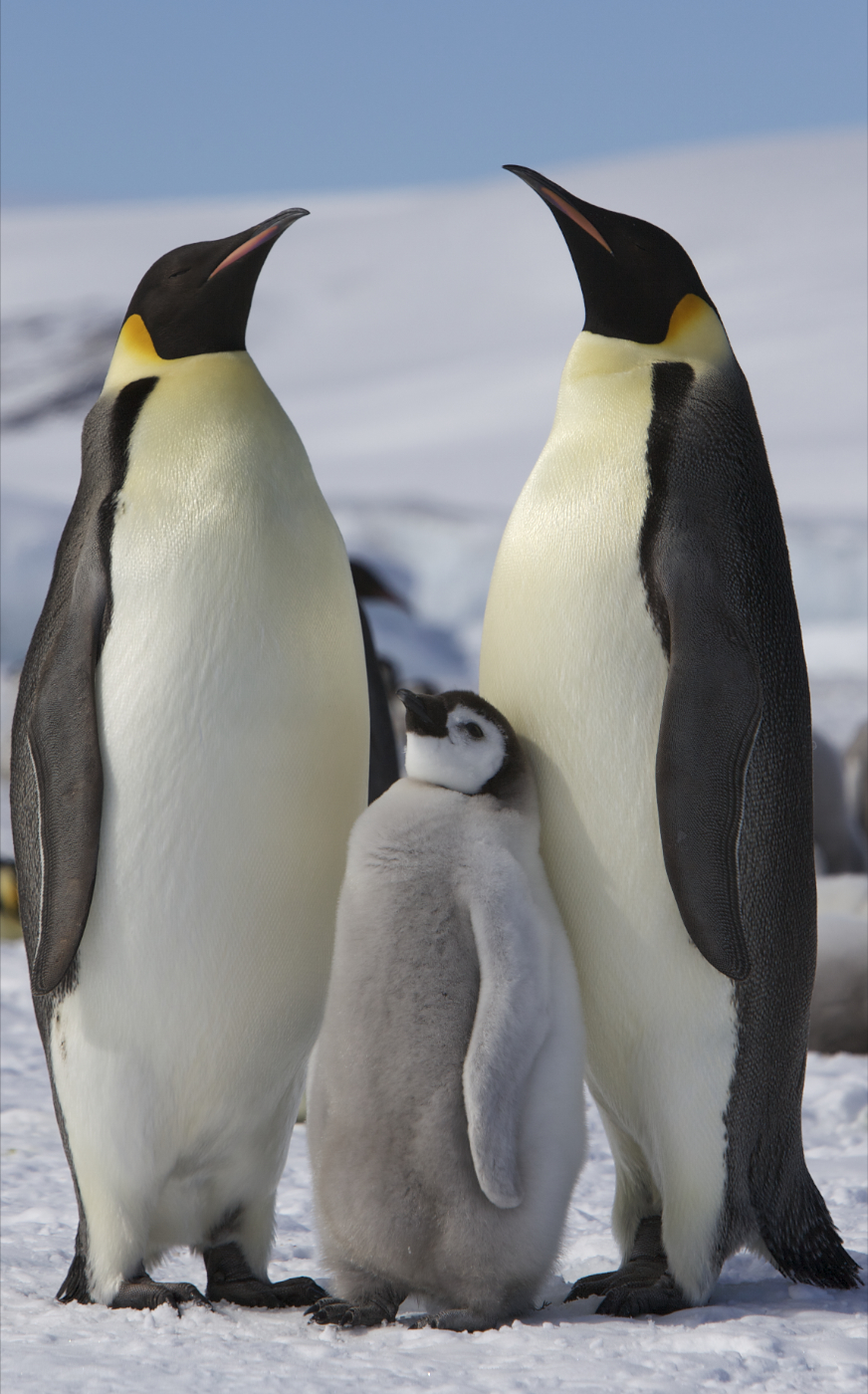
What do penguins look like?

That is really amazing! Let’s discover awesome penguin facts by this article:

All penguins are black with white undersides, and are commonly described as wearing tuxedos. This color pattern acts as camouflage when the penguin is swimming, protecting it from predators. From underneath, the white belly blends with the bright water surface, and fromabove, the black back is indistinguishable from the dark water. 
Penguin species can be grouped according to common characteristics. Banded penguins have black and white stripe patterns on their chests and heads. The crested penguins all have bright yellow or orange plumes on their heads. Brushtail penguins have long stiff tail feathers. The king and emperor penguins have bright yellow and orange chest and head patches, and the yellow-eyed penguin has a yellow crown. The fairy penguin's feathers are bluish. The emperor penguin is the largest, at nearly four feet tall and seventy-five pounds. 


The small fairy penguin is sixteen inches tall and about three pounds. All have solid, heavy bones that help them dive deeply into the water. They have streamlined bodies that move smoothly through the water as they pump their strong, flipperlike wings and steer using their webbed feet and tails as rudders. Penguins can hold their breath for many minutes at a time, and they frequently leap out of the water, porpoiselike, to take inmore air. On land, penguins walk with an awkward sideways waddle. Because their short legs are set back on their bodies, they stand erect and must hold out their flippers for balance. Penguins often toboggan themselves by flopping on their bellies and pushing with their flippers and feet. Penguin feathers are tiny and stiff, overlapping to form a waterproof coat. 
An underneath layer of down helps to trap warm air and protect the penguin from the cold water and wind. Penguins of the Antarctic region have an insulating layer of blubber. Those in temperate climates often have to cool themselves down by ruffling their feathers and holding out their flippers. They can control the flow of blood to their unfeathered areas, such as the feet and under their flippers, which helps regulate their body temperature. Penguins preen their feathers regularly, to spread waterproofing oil from a gland near the tail.

Penguins have very short legs, which are used under water for steering. On land it's not easy for a penguin to walk. Waddling seems to be the easiest way to walk with short legs (in fact this has been researched by scientists). In addition, some species displace themselves by hopping over the ground.
Although you don't see them, penguins do have knees and upper legs. They are completely enclosed within the penguin body. The upper leg is oriented horizontally. In contrast to other birds (whose feet are placed in the middle of their body) penguin feet are set all the way back, causing an upright stand.

Read more: animal fun facts

Thứ Ba, 16 tháng 8, 2016

Where do tigers live?

If you have ever caught yourself pondering what do Tigers live? You can’t say that you haven’t because that means that you wouldn’t have ended up here! Let us teach you all about habitats of one of the most amazing big cats in the world.

The tiger is native to Asia from the Caucasus and the Caspian Sea to Siberia in the north and Indonesia and even in Borneo and the Philippines in the south. Tigers use to had a huge habitat because they are able to adapt to different types of environments which range from the Siberian taiga to open grasslands and tropical mangrove swamps. However as it can be seen on the map, their habitat has been reduced dramatically.

Kết quả hình ảnh cho tigers

Tigers are extremely territorial though so they will fight other animals and other tigers that invade their space. This problem has become more of an issue due to the natural environment for tigers being destroyed at an alarming rate, as a male tiger may have a territory of up to 60 to 100 square kilometers, while females up to 20 square kilometers, as this numbers change according with the habitat and subspecies. As a result they have to venture into new territories to be able to find adequate amounts of food.


Tigers tend to live on their own, depending on themselves for survival. They will only be seen with other tigers when they are looking for a mate or in the case of females when they are taking care of their offspring. The males have more personal territory than females when it comes to their natural habitat. It is natural for the females to have territories that overlap that of males. This is more acceptable than if another male tries to invade that same type of space.

Chủ Nhật, 14 tháng 8, 2016

What is importance of science?

We all know for sure that it is importance to find out and learn about science facts but what is importance of science? Why should we learn about it?


Can you imagine a world without science? You wouldn’t have to worry about being late to work or finding your car keys because, well, jobs and cars wouldn’t exist. You would be living in a cave or a rudimentary built shelter, at best, wondering whether you’ll be able to hunt something for your next meal, or get killed and become some wild animal’s next feast in the process. The moment that early humans decided to take action into securing their survival marked the birth of science, as that’s the moment when they started asking themselves two vital questions about the world surrounding them: “How?” and “Why?”.

Basically, that’s exactly what science is about: understanding how things work and why, and the answers science gave us so far allowed us to survive, ensure our survival and improve our lifestyle in the process, so I don’t think it’s exaggerated to say that science is the most important element of our existence. If you want a proof of just how awesome science is, check out this online course on geology and you will learn about the origins of our planet, how it was formed and why it is in the form we know it today – starting from billions of years ago, all the way up to the present day.

For other facts of life

Thứ Sáu, 12 tháng 8, 2016

You might be surprised with the owl facts

Here are some amazing facts about owl for those who love to know more about animal facts:


  • Many owl species have asymmetrical ears that are different sizes and different heights on their heads. This gives the birds superior hearing and the ability to pinpoint where prey is located, even if they can't see it.
  • Several owls species have ear tufts on their heads but they aren't ears at all. These tufts of feathers may indicate the bird's mood, help keep it camouflagedby mimicking branches or leaves or be used to show aggression.
  • The flattened facial disk of an owl funnels sound to the bird's ears and magnifies it as much as ten times to help the owl hear noises humans can't detect.
  • Feather coloration is species specific. It can be brown, rust, gray, white and black. Mix of the colors provides nice camouflage for both predators and prey.
  • Some species of owls have ear-like structures on their head. They cannot detect sound, but serve as structures which provide camouflage. They can be also used to show aggression.
  • Owls have excellent sense of hearing. Ears are located on the both sides of the head, behind the eyes. They are often located on different heights, providing better reception of the sound, which is important for detection of the prey.
  • Although it looks like the owl can turn its head completely (360 degrees), it can move it only to a certain extent (just 270 degrees). Owl can look across its shoulder, but it cannot rotate the head a full circle.
  • Owls are farsighted, which means that they cannot clearly see the objects which are in front of their eyes.
  • An owl's eyes are supported by bony eye sockets and they cannot turn their eyes. Instead, owls rotate their heads up to 270 degrees (135 degrees to either side), but they cannot turn their heads all the way around.
  • An owl has three eyelids: one for blinking, one for sleeping and one for keeping the eye clean and healthy. The third eyelid is also called the nictitating membrane, and many other birds also have it.
  • A barn owl can eat up to 1,000 mice each year, usually swallowing them whole. Many farmers try to attract barn owls to help control rodent populations in agricultural fields.
  • Owls are carnivorous and will eat rodents, small or medium sized mammals, nocturnal insects, fish and other birds, including smaller owls. After digestingtheir food, owls regurgitate hard pellets of compressed bones, fur, teeth, feathers and other materials they couldn't digest. Ornithologists study those pellets to learn more about an owl's diet.
  • Owls have zygodactyl feet with two toes pointing forward and two toes pointing backward, and all their toes have sharp talons. This gives the birds a stronger, more powerful grip so they can be more effective predators.

Thứ Năm, 11 tháng 8, 2016

Facts you didn't know about pigs before

Keep reading for more interesting information about animal facts. this is pig facts:
  • Humans farm pigs for meat such as pork, bacon and ham.
  • Some people like to keep pigs as pets.
  • Wild pigs (boar) are often hunted in the wild.
  • In some areas of the world, wild boars are the main source of food for tigers.
  • Feral pigs that have been introduced into new areas can be a threat to the local ecosystem.
  • Pigs can pass on a variety of diseases to humans.
  • If you’ve ever suggested that someone was ‘sweating like a pig’, then you’d be wrong. Pigs have hardly any sweat glands, and one of the best ways for them to cool down is to wallow in all of that glorious mud.


  • Pigs do not “eat like pigs” or “pig out.” They prefer to eat slowly and savor their food.
  • Suzanne Held, who studies the cognitive abilities of farmed animals at the University of Bristol’s Centre of Behavioural Biology, says that pigs are “really good at remembering where food is located, because in their natural environment food is patchily distributed and it pays to revisit profitable food patches.”
  • Pigs are clean animals. If given sufficient space, they will be careful not to soil the area where they sleep or eat. Pigs don’t “sweat like pigs”; they are actually unable to sweat. They like to bathe in water or mud to keep cool, and they actually prefer water to mud. One woman developed a shower for her pigs, and they learned to turn it on and off by themselves.
  • In his book The Whole Hog, biologist and Johannesburg Zoo director Lyall Watson writes, “I know of no other animals [who] are more consistently curious, more willing to explore new experiences, more ready to meet the world with open mouthed enthusiasm. Pigs, I have discovered, are incurable optimists and get a big kick out of just being.”

Thứ Tư, 10 tháng 8, 2016

Tigers - Awesome Facts and Photos

Learn tiger facts for kids about the size, diet, population, range, behavior and other fascinating facts about tigers and some other animal facts:

Tiger's

  • A tiger can eat up 60 pounds of meat but usually they eat less.
  • It can take a couple of days for the tiger to eat their entire prey.  They will eat until they are full then cover the animal with leaves and dirt to hide it.  When they are hungry again they will go back to finish eating.
  • Unlike other cats tiger like the water.  They like to live by water.  Tigers can swim up to 4 miles.
  • Like our fingerprints no two tigers have the same stripe pattern.
  • Tigers are in the cat family and is the largest cat in the world.
  • A male tiger is called a Tiger.
  • A female tiger is called a tigress.
  • A baby is called a cub.
  • They can weight between 250-700 pounds.
  • They can be 6 feet – 11 feet long with a 3 foot long tail.
  • Tigers can run up to 40 miles per hour and jump 16 feet high.
  • A tigers roar can be heard over 2 miles away.
  • They are the 3rd largest land carnivore (meat eating) in the world. Polar Bears are first and Brown Bears are second.


  • Tigers like to hunt at night.  They have excellent eyesight for catching prey.
  • Tigers hunt different types of deer, buffalo, antelopes, wild boars, baby elephant and rhinos and most other animals they can catch.
  • Tigers like to sneak up on their prey, they watch it then sprint to catch it.  They bite their prey throat or back of the neck to kill it.
  • Not only are tigers fur stripped but their skin is stripped too!
  • A tiger retracts their claws when walking.  They do not leave claw prints in their footprints.
  • Tigers like to be alone except during mating.
  • Although tigers are powerful and fast over short distances, the Bengal tiger cannot outrun fleet footed prey such as deer. Instead it uses stealth to catch its victims; attacking from the side or the rear.
  • Tigers use their distinctive coats as camouflage (no two have exactly the same stripes).
     Also see: penguins facts for kids

A range facts of life

Here's a range of 26 little known interesting facts about life. Bear in mind that here is a very small part of life facts:


If you shuffle a pack of cards properly, chances are that exact order has never been seen before in the whole history of the universe.

Adults have fewer bones than a baby.

Humans can’t breathe and swallow at the same time.

There are about 7,000,000,000,000,000,000,000,000,000 atoms in a human body.

There are about 86 billion neurons in an average human brain.

Every atom in your body is billions of years old.

There’s a type of mollusc called a chiton that can make its own magnetic teeth.

Bees sense a flower’s electric field and use it to find pollen.

Beaked whales can hold their breath for over two hours.

Mantis shrimp can punch at 80 kilometres per hour.

The universe might be a hologram.

There’s a gas cloud in the constellation of Aquila that contains enough alcohol to make 400 trillion trillion pints of beer.

Looking at stars is basically looking into the past, because of how long it takes the light from them to reach us.
Dung beetles can use the Milky Way to navigate.

The Milky Way has four spiral arms, not two.

If you cry in space the tears just stick to your face.

During the ice age, 32,000 years ago, a squirrel buried a seed. Now the seed has been used to grow a flower.

We’ve found over a thousand planets outside our solar system just in the last 20 years.

There’s a planet where it rains glass, sideways.

Thứ Hai, 8 tháng 8, 2016

Interesting plant facts


1. The earth has more than 80,000 species of edible plants.

If you’re ever in the mood to try something new, the good news is that there is certainly food you haven’t tasted yet still growing somewhere in the world.


2. 90 percent of the foods humans eat come from just 30 plants.

Out of tens of thousands of plants we could eat, mankind chooses to consume only about 30 of them. It’s crazy to contemplate how limited our diets are compared to all of the different foods we could be eating. If you think the selection of which plants we eat has anything to do with their nutritional benefits, however, you’d be wrong …

3. Nutrition doesn’t factor into the crops we do mass produce.

The world’s largest farmers have pursued certain crops because they can grow a lot of them more quickly, easily and inexpensively to turn a better profit. As a result, most of the most healthful plants stay off of our dinner plates because they aren’t available at grocery stores. Still, sustenance isn’t the only thing humans rely on plants for …

4. 70,000 plant species are utilized for medicine.

As it turns out, humans are more diversified in the plants we use for medicine. Although a large portion of that figure applies to traditional medicine, modern medicine is not excepted from plant help. Half of the drugs prescribed in the U.S. have plant origins, many coming out of the rainforest, yet …

5. Only one percent of rainforest plants have been studied for medicinal potential.

Given how valuable plants can be medicinally, the rainforest houses a host of possible cures for ailments new and old. This untapped resource could still hold the key to medical breakthroughs. Of course, a lot of this potential could be lost considering …


6. 80 percent of the Earth’s original forests have been cleared or destroyed.

The same forests that dominated the land 8,000 years ago are all but gone. Approximately four-fifths of the forests are gone thanks to human intervention—just think of how many plant species may have been lost in that process. If you thought protections were in place, actually …

7. Just 10 percent of the world’s plant-rich areas are protected.

Of the most biodiverse areas on the planet, only 10 percent are officially “protected” to ensure the survival of a multitude of species—plant and animal alike. Worse still, many of the supposedly protected areas are done so nominally only, leaving plants threatened by external factors they should be safeguarded from. This is especially problematic because …

8. More than half of plant species are native to just one country.

Chances are, a plant you find in one part of the world is not currently growing anywhere else. As plant habitat is ruined, there’s little point in hoping that the killed plants could be found and harvested somewhere else in the future.
Được tạo bởi Blogger.
Copyright © 2015 All amazing and interesting facts
| Distributed By Gooyaabi Templates