Featured
Hiển thị các bài đăng có nhãn science facts. Hiển thị tất cả bài đăng

Thứ Tư, 2 tháng 11, 2016

Nightmare Machine

I have a keen interested on and just want to share this amazing information about Nightmare Machine

The idea of artificial intelligence (AI) — autonomous computers that can learn independently — makes some people extremely uneasy, regardless of what the computers in question might be doing.

Those individuals probably wouldn't find it reassuring to hear that a group of researchers is deliberately training computers to get better at scaring people witless.

The project, appropriately enough, is named "Nightmare Machine." Digital innovators in the U.S. and Australia partnered to create an algorithm that would enable a computer to understand what makes certain images frightening, and then use that data to transform any photo, no matter how harmless-looking, into the stuff of nightmares. [5 Intriguing Uses for Artificial Intelligence (That Aren't Killer Robots)


The idea of artificial intelligence (AI) — autonomous computers that can learn independently — makes some people extremely uneasy, regardless of what the computers in question might be doing.

Those individuals probably wouldn't find it reassuring to hear that a group of researchers is deliberately training computers to get better at scaring people witless.

The project, appropriately enough, is named "Nightmare Machine." Digital innovators in the U.S. and Australia partnered to create an algorithm that would enable a computer to understand what makes certain images frightening, and then use that data to transform any photo, no matter how harmless-looking, into the stuff of nightmares. [5 Intriguing Uses for Artificial Intelligence (That Aren't Killer Robots)]

Images created by Nightmare Machine are unsettling, to say the least. Iconic buildings from around the world appear eroded and distorted within shadowy settings or amid charred and smoldering landscapes, glimpsed through what appears to be murky, polluted water or toxic gas clouds.

Nightmare Machine's faces are equally disturbing. Some of the subjects are almost abstract, but subtle — creepy suggestions of hollow eyes, bloody shadows and decaying flesh still cause unease. Even the lovable Muppet Kermit the Frog emerges from the process as a zombie-like creature that would terrify toddlers — and adults, too.

The primary reason for building Nightmare Machine was to explore the common fear inspired by intelligent computers, its trio of designers told Live Science. They wanted to playfully confront the anxiety inspired by AI, and simultaneously test if a computer is capable of understanding and visualizing what makes people afraid.

"We know that AI terrifies us in the abstract sense," co-creator Pinar Yanardag, a postdoctoral researcher at MIT Media Lab in Massachusetts, wrote in an email. "But can AI scare us in the immediate, visceral sense?"

The designers used a form of artificial intelligence called "deep learning" — a system of data structures and programs mimicking the neural connections in a human brain — to teach a computer what makes for a frightening visual, according to co-creator Manuel Cebrian, a principal research scientist at CSIRO Data61 in Australia.

"Deep-learning algorithms perform remarkably well in several tasks considered difficult or impossible," Cebrian said. "Even though there is a lot of room for improvement, some of the faces already look remarkably creepy!"

Once deep-learning algorithms understood the visual elements that were commonly perceived as spooky, they applied those styles to images of buildings and human faces — with chilling results


"Elon Musk said that with the development of AI, we are 'summoning the demon,'" co-creator Iyad Rahwan, an associate professor at MIT Media Lab, told Live Science about science facts.

"We wanted to playfully explore whether and how AI can indeed become a demon, that can learn how to scare us, both by extracting features from scary images and subsequent refinement using crowd feedback," Rahwan said. He added that the timing of their spooky experiment — close to Halloween — was no accident. It may be one of the most awesome infor from factoflife we’ve enjoyed.
 
"Halloween has always been a time where people celebrate what scares them," he said, "so it seems like a perfect time for this particular hack." 

"Our research group's main goal is to understand the barriers between human and machine cooperation," Rahwan said. "Psychological perceptions of what makes humans tick and what makes machines tickare important barriers for such cooperation to emerge. This project tries to shed some light on that front — of course, in a goofy, hackerish Halloween manner!"

And if you're brave enough, Nightmare Machine could use your help to learn how to become even scarier.

The project's creators used deep-learning algorithms to generate frightening images of dozens of faces, tweaking the results to make them look even more disturbing. Nightmare Machine visitors can vote on these so-called "Haunted Faces," to help the algorithm "learn scariness," according to instructions on the website.

Teaching a computer to be more terrifying — what could possibly go wrong?
You might be like to see weird but true, crazy, fun, amazing facts, fact of life, fact of the day, and funny videos, video clips, joke of the day, images, photos.

Thứ Hai, 31 tháng 10, 2016

Science facts, unbelievable science facts

Science facts, unbelievable science facts, amazing science facts for your checking out are all shown as below, let's dive in

1. Babies have around 100 more bones than adults


Babies have about 300 bones at birth, with cartilage between many of them. This extra flexibility helps them pass through the birth canal and also allows for rapid growth. With age, many of the bones fuse, leaving 206 bones that make up an average adult skeleton.

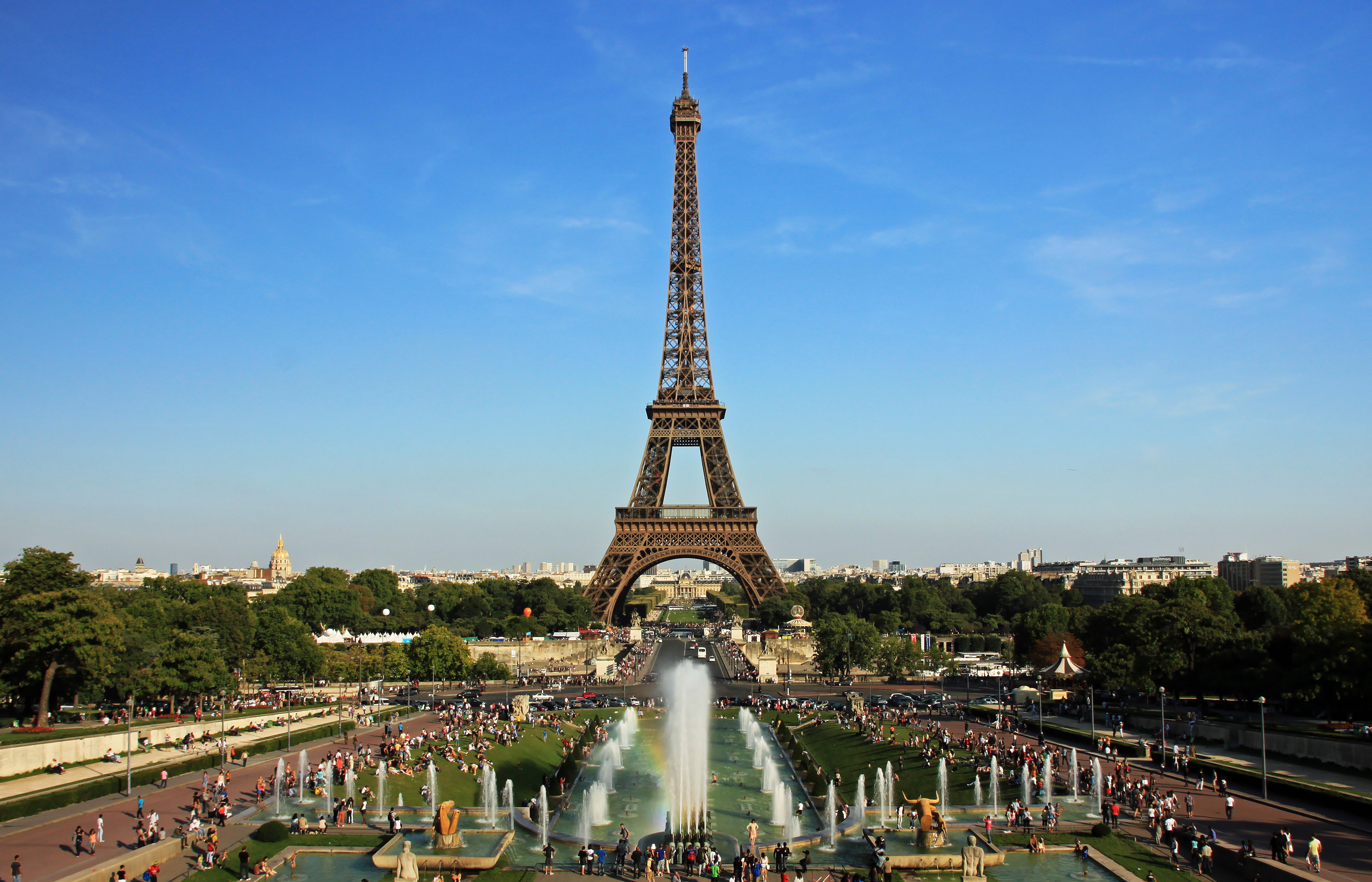
2. The Eiffel Tower can be 15 cm taller during the summer

Large structures are built with expansion joints which allow them some leeway to expand and contract without causing any damage.


When a substance is heated up, its particles move more and it takes up a larger volume – this is known as thermal expansion. Conversely, a drop in temperature causes it to contract again. The mercury level inside a thermometer, for example, rises and falls as the mercury’s volume changes with the ambient temperature. This effect is most dramatic in gases but occurs in liquids and solids such as iron too. For this reason large structures such as bridges are built with expansion joints which allow them some leeway to expand and contract without causing any damage.

3. 20% of Earth’s oxygen is produced by the Amazon rainforest


Our atmosphere is made up of roughly 78 per cent nitrogen and 21 per cent oxygen, with various other gases present in small amounts. The vast majority of living organisms on Earth need oxygen to survive, converting it into carbon dioxide as they breathe. Thankfully, plants continually replenish our planet’s oxygen levels through photosynthesis. During this process, carbon dioxide and water are converted into energy, releasing oxygen as a by-product. Covering 5.5 million square kilometres (2.1 million square miles), the Amazon rainforest cycles a significant proportion of the Earth’s oxygen, absorbing large quantities of carbon dioxide at the same time.

4. Some metals are so reactive that they explode on contact with water


There are certain metals – including potassium, sodium, lithium, rubidium and caesium – that are so reactive that they oxidise (or tarnish) instantly when exposed to air. They can even produce explosions when dropped in water! All elements strive to be chemically stable – in other words, to have a full outer electron shell. To achieve this, metals tend to shed electrons. The alkali metals have only one electron on their outer shell, making them ultra-keen to pass on this unwanted passenger to another element via bonding. As a result they form compounds with other elements so readily that they don’t exist independently in nature.

5. A teaspoonful of neutron star would weigh 6 billion tons


A neutron star is the remnants of a massive star that has run out of fuel. The dying star explodes in a supernova while its core collapses in on itself due to gravity, forming a super-dense neutron star. Astronomers measure the mind-bogglingly large masses of stars or galaxies in solar masses, with one solar mass equal to the Sun’s mass (that is, 2 x 1030 kilograms/4.4 x 1030 pounds). Typical neutron stars have a mass of up to three solar masses, which is crammed into a sphere with a radius of approximately ten kilometres (6.2 miles) – resulting in some of the densest matter in the known universe. This is one of the most amazing facts ever.

6. Hawaii moves 7.5cm closer to Alaska every year


The Earth’s crust is split into gigantic pieces called tectonic plates. These plates are in constant motion, propelled by currents in the Earth’s upper mantle. Hot, less-dense rock rises before cooling and sinking, giving rise to circular convection currents which act like giant conveyor belts, slowly shifting the tectonic plates above them. Hawaii sits in the middle of the Pacific Plate, which is slowly drifting north-west towards the North American Plate, back to Alaska. The plates’ pace is comparable to the speed at which our fingernails grow.

7. Chalk is made from trillions of microscopic plankton fossils


Tiny single-celled algae called coccolithophores have lived in Earth’s oceans for 200 million years. Unlike any other marine plant, they surround themselves with minuscule plates of calcite (coccoliths). Just under 100 million years ago, conditions were just right for coccolithophores to accumulate in a thick layer coating ocean floors in a white ooze. As further sediment built up on top, the pressure compressed the coccoliths to form rock, creating chalk deposits such as the white cliffs of Dover. Coccolithophores are just one of many prehistoric species that have been immortalised in fossil form, but how do we know how old they are? Over time, rock forms in horizontal layers, leaving older rocks at the bottom and younger rocks near the top. By studying the type of rock in which a fossil is found palaeontologists can roughly guess its age. Carbon dating estimates a fossil’s age more precisely, based on the rate of decay of radioactive elements such as carbon-14.

8. In 2.3 billion years it will be too hot for life to exist on Earth


Over the coming hundreds of millions of years, the Sun will continue to get progressively brighter and hotter. In just over 2 billion years, temperatures will be high enough to evaporate our oceans, making life on Earth impossible. Our planet will become a vast desert similar to Mars today. As it expands into a red giant in the following few billion years, scientists predict that the Sun will finally engulf Earth altogether, spelling the definite end for our planet.

Check out for more cool, random, weird but true, crazy, fun, amazing facts, fact of life, fact of the day, and funny videos, video clips, funny pics, images, photos.

Thứ Năm, 27 tháng 10, 2016

How much did you know about Jupiter planet facts?

This writing is so amazing. I just wanna all of you can enjoy it. Keep seeing to enjoy Jupiter facts to check how much did you know about this science facts


1. Jupiter is the 5th planet from the Sun.

2. Jupiter is the largest planet in our solar system, with a diameter of 142,984 kilometers.

3. Jupiter Planet is classed as a gas giant, as is Saturn, Uranus, and Neptune.

4. The Romans named the planet after Jupiter, King of the Gods in Ancient Roman mythology.

5. Jupiter Planet was discovered in 1610 by Galileo Galilei. Galileo also discovered four of the largest moons of Jupiter. These moons are aptly called the Galilean Moons in honor of his discover. The four moons discovered by Galileo were Callisto, Ganymede, Europa and Io. The largest moon of Jupiter, Ganymede, has a greater diameter than Mercury Planet.

6. From the Earth, Jupiter Planet is the third brightest object in the night sky, right after the Moon and Venus Planet.

7. Jupiter is so massive that its total mass is twice as much as the mass of all planets in the Solar System combined together. Jupiter Planet is capable of holding 1300 Earths in it. However, the mass of Jupiter is only 1 thousandths of the total mass of the Sun.


8. Jupiter atmosphere is composed of 10.2% helium, 89.8% molecular hydrogen, and trace amounts of ammonia hydrosulfide aerosols, water ice aerosols, water, ethane, hydrogen deuterite, ammonia, and methane.

9. Jupiter is the fastest spinning planet in the Solar System. This planet may complete a full rotation around its axis in just less than 10 hours. That’s amazing. It completes a rotation of the Sun every 11.86 years.

10. The core of Jupiter is massive and dense. Its composition is uncertain. Some scientists believe that it is made of rocks, metals, water ice, ammonia ice and methane ice. All we know is that this core is surrounded by a layer of helium-rich fluid metallic hydrogen and the whole thing is then wrapped up in an atmosphere that primarily consists of molecular hydrogen. Here is one of the most amazing facts on the planet we had known.

11. The mass of the core of Jupiter Planet is 10 times the mass of our Earth. The layer of fluid metallic hydrogen covering the core extends up to 90% of the diameter of the planet. 

12. If Jupiter had managed to grab 80 times more mass than its current mass, it would actually end up being a star instead of a planet.

13. Jupiter has 67 moons in total. Most of them are named after names of lovers of RomanGods. 

14. The average distance from Jupiter to the Sun is about 778 million kilometers, which is nearly 5.2 times the distance from the Earth to the Sun.

15. The Great Red Spot is probably the most remarkable feature of Jupiter Planet. In fact, it is a persistent storm similar to a hurricane on Earth. This storm has been visible for at least 300 years. It also changes its colors quite often, from brick red color to slight brown. 


16. Jupiter’s atmosphere is relatively similar to the Sun’s atmosphere, which mostly consists of helium and hydrogen.

17. The magnetic field of Jupiter is 20,000 times stronger to that of Earth’s magnetic field.

18. The white clouds of Jupiter are formed by frozen ammonia crystals while the dark clouds are the results of other chemicals found in the darker belts.

19. The gravity of Jupiter is 2.4 times higher than the Earth’s. So it means that a person weighing about 200 pounds on Earth will weigh up to 480 pounds on this planet. It's the real, not just jokes for fun.

20. Its atmosphere pressure is up to 1000 times greater than our Earth’s one, which means you can be easily crushed to death in this planet.

Chủ Nhật, 14 tháng 8, 2016

What is importance of science?

We all know for sure that it is importance to find out and learn about science facts but what is importance of science? Why should we learn about it?


Can you imagine a world without science? You wouldn’t have to worry about being late to work or finding your car keys because, well, jobs and cars wouldn’t exist. You would be living in a cave or a rudimentary built shelter, at best, wondering whether you’ll be able to hunt something for your next meal, or get killed and become some wild animal’s next feast in the process. The moment that early humans decided to take action into securing their survival marked the birth of science, as that’s the moment when they started asking themselves two vital questions about the world surrounding them: “How?” and “Why?”.

Basically, that’s exactly what science is about: understanding how things work and why, and the answers science gave us so far allowed us to survive, ensure our survival and improve our lifestyle in the process, so I don’t think it’s exaggerated to say that science is the most important element of our existence. If you want a proof of just how awesome science is, check out this online course on geology and you will learn about the origins of our planet, how it was formed and why it is in the form we know it today – starting from billions of years ago, all the way up to the present day.

For other facts of life
Được tạo bởi Blogger.
Copyright © 2015 All amazing and interesting facts
| Distributed By Gooyaabi Templates